The four kinds of electronic craps
Casinos use the same words loosely, so it helps to sort the machines by one question: what produces the roll? There are four answers. A random number generator, real dice inside a dome, real dice at a live table with personal betting screens, or a live dealer’s table linked to a bank of stadium terminals. Everything else follows from that.
| Type | What decides the roll | Dealer | Examples from casino pages |
|---|---|---|---|
| Video or virtual craps | Random number generator | None | Mystic Lake (Video Craps), Stockman’s in Fallon |
| Bubble craps | Real dice bounced in a dome | None | Mount Airy, Blue Lake, Morongo |
| Hybrid live dice | Real dice at a live table | Varies | Roll To Win at Palace Station, Sunset Station |
| Stadium or arena | A live table, bet from terminals | Yes | Foxwoods Arena, Eureka Mesquite, Chumash |
Video craps
The simplest electronic craps machine is a screen showing animated dice. The result comes from software, and nothing physical moves. Mystic Lake in Minnesota advertises Video Craps, and Kewadin in Michigan’s Upper Peninsula lists virtual craps. Because these games are pure software, the random number generator is the whole game, which is why labs test it so heavily.
Bubble craps
A bubble machine seals two real dice inside a clear dome and bounces them with air or a mechanical kicker, then reads the result. There is no dealer. Mount Airy in the Poconos lists one as its latest electronic craps game. Our page on bubble craps covers these machines in detail, including the crapless versions.
What is stadium craps?
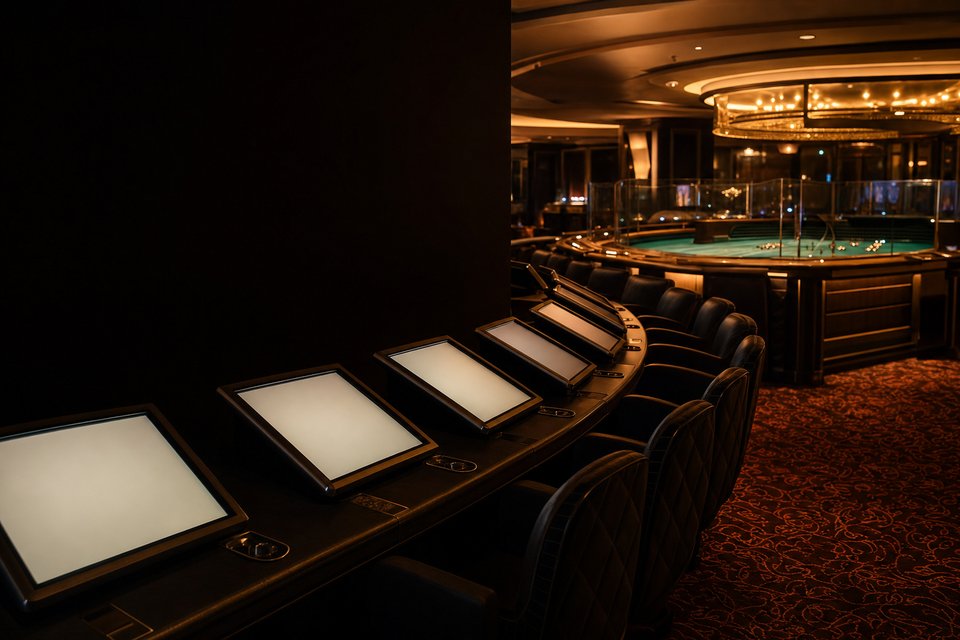
Stadium craps puts you at a personal terminal, betting on a live game run by a dealer. Foxwoods in Connecticut calls its version Arena and lets players follow four live table games at once. Eureka Casino Resort in Mesquite, Nevada, lists craps among its stadium games, and Chumash in California offers craps only on stadium terminals.
The appeal is scale. One live table can serve many seats, so casinos can keep minimums low and the game open longer. For you the experience sits halfway between a machine and a pit: real dice, real people on the table, but you touch a screen to bet and the machine pays you. Nobody else sees how much you wager.
Dealer-assisted games are close cousins. Golden Nugget in downtown Las Vegas advertises dealer-assisted Interblock craps from $5, the Nugget in Sparks runs electronic dealer-assisted craps, and MGM National Harbor lists Quartz hybrid electronic games that include craps. Names vary by manufacturer, but the principle is the same: a person runs the game, a screen takes your money.
RNG against real dice: does it change the odds?
It should not, and on regulated machines it does not. Gaming Laboratories International publishes the GLI-24 standard for electronic table games. It says that where a machine plays a recognizable game, the same probabilities as the live game must be evident. For craps that means a 7 on one roll in six, a 6 or 8 five times in 36.
Physical dice are easier to trust, since you can watch them. Software asks you to trust the lab. Either way the house edge is not hidden in the roll; it sits in the payouts, exactly as on felt. A pass line costs 1.41% of each bet on any of these machines, and the odds behind it cost nothing.
| Bet | Pays | House edge | Per roll |
|---|---|---|---|
| Pass Line | 1 to 1 | 1.41% | 0.42% |
| Don't Pass | 1 to 1 | 1.36% | 0.40% |
| Place 6 | 7 to 6 | 1.52% | 0.46% |
| Field | 1 to 1; 2 pays 2 to 1; 12 pays 2 to 1 | 5.56% | 5.56% |
| Hard 6 | 9 to 1 | 9.09% | 2.78% |
| Any Seven | 4 to 1 | 16.67% | 16.67% |
| Horn | 30 to 1 on 2 or 12, 15 to 1 on 3 or 11 (one unit each) | 12.50% | 12.50% |
What does change is speed. Machines run on a timer and never wait for a slow shooter. More rolls per hour means more money exposed to the edge, so a cheap bet on a fast machine can cost you as much per hour as a pricier bet at a slow table. Our bankroll management guide shows how to budget.
How to play electronic craps, step by step
Learning how to play electronic craps takes a few rolls. Insert cash or a ticket to load credits. Choose a chip value on the screen. Touch the pass line before the timer runs out, and watch the roll. If a point is set, the machine marks it, and an odds button lets you back your line bet at true odds.
From there you can place numbers, make come bets or bet the field. The machine settles everything instantly and adds wins to your credits. When you want to leave, press cash out, take the ticket, and exchange it at the cage or a kiosk. Nothing about the betting differs from what our how to play craps guide describes.
One habit saves money. Before your first bet on a new cabinet, open the help or rules screen. It tells you whether odds are offered and how large, how commissions on buy bets are charged, and what each proposition pays. Two machines that look identical can differ on all three.
Where to find electronic craps and stadium craps in Las Vegas and beyond
In Las Vegas, casino pages list electronic craps at Paris, Planet Hollywood, Flamingo, Harrah’s, the LINQ, Horseshoe, Encore and Tuscany Suites, with crapless and EZ Craps versions at several of them. Palace Station, Sunset Station and Durango run Roll To Win Craps, and Golden Nugget runs dealer-assisted Interblock craps downtown. Our Las Vegas craps guide lists the rooms.
Outside Nevada, Rivers Casino Philadelphia offers Universal Cabinet Craps with individual player stations, Mount Airy has bubble craps, Bally’s Quad Cities in Illinois runs stadium automated craps, and Florida pari-mutuel casinos such as Magic City in Miami offer craps only as an electronic table game. Our casino directory covers more states.
To learn before you travel, the free craps table on this site uses the same rules and payouts. Practice with the timer rhythm in mind and decide your bet before the roll, not during it. On a bubble machine such as Blue Lake’s, a countdown closes betting before every roll, whether or not you have finished touching the screen.