Buying in: cash on the layout, never in the hand
Find an open spot at the rail and wait for a pause, when the dice sit with the stickman. Then put your cash flat on the layout in front of you and say “change, please” or “chips”. A dealer will never take money directly from your hand. Surveillance cameras have to see every bill cross the table.
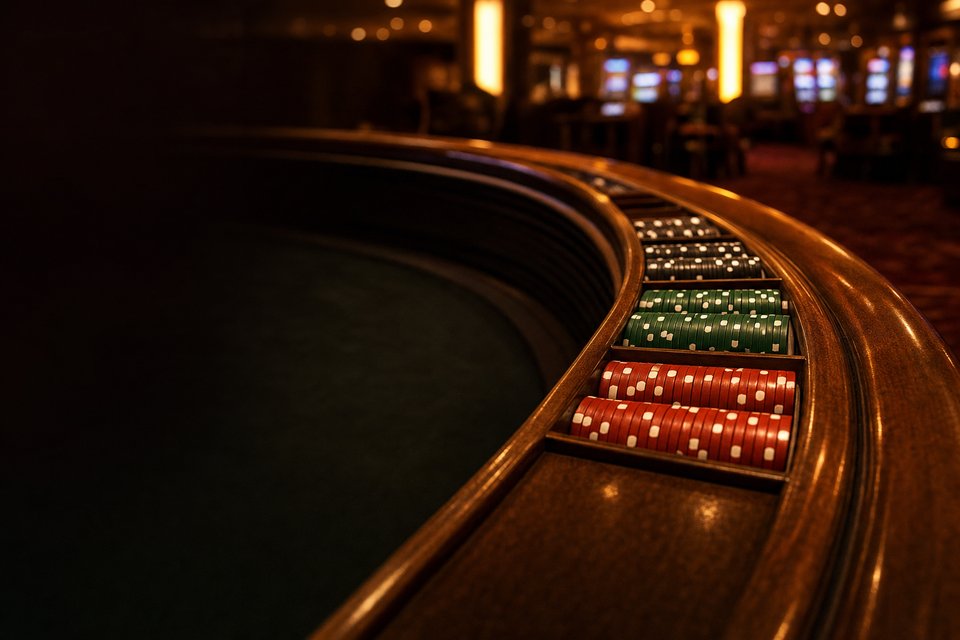
The boxman counts the bills, the dealer cuts your chips and pushes them to you, and you set them in the grooved rail in front of you. Keep them there. Your rail space is yours for the session, and players rarely reach into someone else’s section. The craps table layout shows where the rail and each betting area sit.
Timing matters most. Dropping cash while the shooter has the dice holds up the roll, and a bill on the layout during a throw can get hit by a die. Wait for the stickman to pull the dice back. Craps etiquette is mostly about that rhythm: bet, wait, roll, pay, and then the next round.
When to drop chips and how to call bets
Place your bets while the dice are in the center. Once the stickman pushes them to the shooter, you should be done. You set your own pass line and field chips, but place bets, odds on come bets and the center props are handled by the dealers, so you toss the chips to them and say the bet clearly.
Toss chips gently so they land near the dealer, not across other bets, and say what you want: “six and eight” or “hard ten for five”. For center bets the stickman takes the call. If a bet is still being set when the shooter throws, the dealer decides, and late bets can be refused.
Learn the few words that change a bet. “Press it”, “same bet” and “take it down” tell the dealer what to do with a winning bet. Our craps terms glossary lists them with their exact meanings, which saves an argument about whether you wanted the winnings back or on the number.
The dice: one hand, both walls and hands out of the way
When it is your turn to shoot, the stickman pushes five dice toward you and you pick two. Use one hand, keep it over the table and leave the other three alone. Two hands on the dice, or dice taken below the rail, draws an immediate warning, because both are old cheating moves the boxman is paid to watch for.
Throw so both dice bounce off the far wall and its rubber pyramids. That bounce makes each roll random. A throw that falls short usually earns a reminder to hit the back wall, and a die that leaves the table is checked or swapped before play continues. A good toss is firm but not wild, landing past the center.
The other side of the dice rule concerns everyone else. When the dice are in the air, keep your hands out of the table. A die that hits a hand or a stack of chips can land anywhere, and players will blame you if it lands on a seven. Most of them are joking. Some are not, and they remember.
Tipping the dealers: how tokes work
Tips at a craps table are called tokes, and come in two forms. You can hand chips to the dealers, usually when leaving. More often, players make a bet for the crew, placing a small chip and saying “for the boys” or “for the dealers”. If that bet wins, the dealers keep the payout, and it often stays up.
The most common toke bets are a unit on the pass line with the player’s own bet, or a chip on a hardway or the yo. A line toke gives the crew the best chance to win something, since the pass line carries a 1.41% edge, while a hardway toke has a bigger payout the crew will rarely see.
How much is up to you. There is no percentage rule, and at many casinos the crew pools its tokes. A common approach is a unit toke when a hand gets hot or when you color up after a winning session. Tip in line with your own betting level and how well the crew ran the game for you.
Craps superstitions the rail still keeps
The biggest craps superstition is the word seven. Once a point is set, many players refuse to say it and call it big red or “the other one”. Some also dislike a buy-in during a hot hand, dice flying off the table, or don’t pass bets during a long roll. None of it touches the math.
Other beliefs sound odder. Some shooters insist on setting the dice a certain way, some blow on them, and many tables have a regular who will not bet until he has seen a new shooter throw. Every roll still has the same 16.67% chance of a seven, whatever anyone says or does, but respecting the habits keeps the peace.
The friendliest reason for the superstitions is that craps is a team game for most of the table. When a shooter makes point after point, everyone on the pass line wins together, and a streak like that feels fragile. Craps etiquette around luck is really about not being the person blamed when the hand finally ends.
Speed of play, drinks and leaving the table
A good craps table moves fast, and a busy one barely pauses between rolls. Have your chips ready before your turn to bet, know what you want, and do not ask the dealer to explain the rules during a hot hand. Ask during a quiet table or practice first, as our free craps game lets you do.
Keep drinks and phones in the holder under the rail, never on top of it or on the felt, where they can tip into the chips. Smoking rules vary by casino and state. Photos of the table are frowned on in many pits, so ask before you take one, and never film the dealers or other players’ chips.
When you are done, wait for the dice to return to the stickman, push your chips onto the layout and say “color up”. The dealer counts them and hands back larger denominations for the cage. It is also the natural moment for a toke, and a good way to leave the crew smiling.
Craps etiquette at your first table
Start at a quieter table with a lower minimum if you can. The dealers have more time, the regulars are more patient, and you can watch a few hands before buying in. Stand where you can see the whole layout, which is usually near the stickman, and keep your first bets simple: the pass line with odds.
Set a session budget before you buy in and keep it in your pocket, not the rail. The bankroll management guide shows how to size a buy-in against the table minimum, and the payout chart helps you check what the dealer pays. When the stickman offers you the dice, take two with one hand and throw.